

Family Law & Mediation Services in BC
Supporting individuals and families across BC through separation, divorce, relationship planning, mediation, and child-focused processes.
How Can We Partner with You?
-
Separation agreements, mediation, collaborative divorce, negotiation, desk order divorces, and resolution support.
-
Independent legal advice (ILA), unbundled legal services, and guidance for people handling parts of the process themselves.
-
Child-focused processes including Hear the Child Reports and parenting plan support.
-
Cohabitation and marriage agreements that create clarity before problems arise.
-
Med-arb and arbitration for private, binding resolution outside of court.
Separation and Divorce

Separation Agreements
Whether you're at the beginning of the process or stuck in the middle of it, we can help you reach a resolution — without court if at all possible.
A separation agreement is often the most efficient way to formalize the terms of your separation. If you and your spouse can agree on the key issues — property, support, parenting — one lawyer can draft the agreement while the other spouse obtains independent legal advice before signing.
We can assist with:
Separation agreements
Parenting plans
Interim agreements
Property agreements
Already have a DIY agreement? We can review and restructure it into a legally sound document that will hold up, and won't create problems down the road.
Flat fee options are available for some separation agreements, depending on complexity.

Mediation
Mediation is a private process in which a neutral third party helps both spouses reach their own agreements, rather than having decisions imposed by a court.
The mediator doesn't take sides. They help both people communicate clearly, identify what actually matters to them, and work toward practical resolutions.
Rebecca Stanley is a Certified Family Mediator through the Law Society of British Columbia.
The Process
Both spouses retain the mediator jointly and share the cost. Many clients participate without lawyers in the room, typically across two to five sessions, while getting independent legal advice between sessions as needed. Lawyer-assisted mediation is also available.
Why Mediation Works
Both spouses control the outcome — no judge decides for you
Costs are shared and typically far lower than litigation
The process is confidential — nothing goes on the public record
Agreements reached in mediation tend to last, because both parties chose them
Mediation can be appropriate even where there is conflict or a history of family violence, provided the right safeguards are in place.
Some couples choose Mediation-Arbitration, a process that combines mediation and arbitration. With Med-Arb, both parties agree at the outset that if they are unable to resolve all issues through mediation, the remaining issues can be decided through binding arbitration.
If mediation does not result in a complete agreement, arbitration may also be considered as a separate next step.

Our Mediation Package Includes:
Our Family in Two Homes or Our Family in a Few Homes workbook for each participant
An individual confidential meeting with each spouse before the joint session
A customized document checklist and initial collection of documents
One joint mediation session (up to 2.5 hours)
Included in Our Flat Fee Mediation Package:
Our Family in Two Homes or Our Family in a Few Homes workbook for each participant
An individual confidential meeting with each spouse before the joint session
A customized document checklist and initial collection of documents
One joint mediation session (up to 2.5 hours)
After the first joint session, we'll outline next steps and provide flat fee or hourly options for additional sessions or mediated agreement drafting.

Collaborative Divorce
Collaborative Divorce is a structured process in which both spouses, each represented by their own collaboratively trained lawyer, commit to resolving everything without going to court.
Additional professionals can be brought in as needed: financial specialists, separation and co-parenting therapists, or child specialists.
What Everyone Commits To:
Full financial disclosure
Honest, respectful communication
A shared goal of reaching agreement
No court, no litigation threats
If you have children, collaborative divorce has a particular advantage: the skills it builds — structured communication, joint problem-solving — become the foundation for how you co-parent long after the process ends.
Each Collaborative Divorce client receives a copy of the relevant workbook.

Negotiation
Not every spouse will agree to mediation or the collaborative process. That doesn't mean your only option is court.
We work with clients through direct negotiation, engaging with the other party or their counsel to reach fair, practical agreements. Our approach is firm but not combative; we push for good outcomes without manufacturing conflict.
If negotiation is exhausted and litigation becomes unavoidable, we'll help you transition to litigation counsel smoothly.
Some couples choose Mediation-Arbitration, a process that combines mediation and arbitration. With Med-Arb, both parties agree at the outset that if they are unable to resolve all issues through mediation, the remaining issues can be decided through binding arbitration.
If mediation does not result in a complete agreement, arbitration may also be considered as a separate next step.

Desk Order Divorce
Once a separation agreement is in place, most married couples can obtain a divorce order without attending court at all.
We prepare and file the required documentation so the process is as simple as possible with a flat fee rate that includes all court fees and disbursements.
Current flat fee rates (plus taxes):
$2,300 — if no minor or dependent children
$2,500 — if minor or dependent children
I Have an Agreement or Need Legal Support

Independent Legal Advice
Independent Legal Advice (ILA) ensures you fully understand the legal and practical implications of an agreement before you sign it.
ILA is appropriate when:
You participated in mediation and have a draft agreement
Your spouse's lawyer prepared an agreement for your signature
You reached terms through a Family Justice Counsellor
You're signing any interim or final agreement
We review your agreement in full, explain the relevant law, and give you specific recommendations, including proposed changes where needed. You decide what to do with that advice.
Flat fee options available for some ILA matters. Additional costs apply if significant negotiation or redrafting is required.

Unbundled Legal Services
Unbundled services (also called limited scope services) let you access legal support for specific tasks or stages, without retaining a lawyer for full representation.
Support may include:
Legal research
Negotiation or settlement coaching
Procedural guidance
Mediation support
Drafting letters or legal documents
Strategic advice and case preparation
While we don't provide court representation, we can assist behind the scenes — and in certain situations, attend mediation with self-represented clients.
Flat fee options may be available depending on the scope of work.
I’m Looking for My Child's Voice to be Heard
Hear the Child Reports
When parents are negotiating parenting arrangements, the people most affected — the children — often have no direct voice in the process.
A Hear the Child Report gives them one. It's a written, non-evaluative report that captures what a child wants to express about decisions being made for them — where they live, how much time they spend with each parent, and what matters to them. It's not a custody assessment. It doesn't include recommendations. It reflects the child's own words and views.
The report can be used in mediation, negotiation, or litigation. In many cases, it clarifies disputes that parents couldn't resolve on their own — because hearing it from the child directly changes the conversation. A family doesn't stop being a family after separation; this process helps parents remember that.
How It Works
Rebecca meets with the child once to ask carefully structured, age-appropriate questions. She then prepares the report and reviews it with the child to confirm it reflects what they wanted to say.
Please note:
Both parents must consent, unless a court order directs the report
This is not a Section 211 Report or Enhanced Views of the Child Report
The report does not include evaluations or recommendations from the writer
Current flat fee rates (plus taxes):
$1,500 — one child
$2,500 — two children
$3,200 — three children
More information at hearthechild.ca
I'm Planning Ahead With My Partner

Cohabitation & Marriage Agreements
Most couples don't think about a formal agreement until something goes wrong.
The problem is that BC family law already has rules about how property and support are divided — and they may not match what you and your partner would actually choose.
If you've lived together for more than two years, you likely already have legal obligations to each other under the Family Law Act, whether or not you're married, and whether or not you've discussed it.
A cohabitation or marriage agreement lets you decide those terms yourselves — clearly, in writing, before there's any conflict. Think of it as building the right foundation before the walls go up.
These agreements can:
Establish how finances and property are managed during the relationship
Protect assets brought into the relationship, inheritances, or business interests
Set out what happens financially if you separate
Reduce the cost and conflict of separation if it ever occurs
We work with couples on cohabitation agreements, marriage agreements, and agreement review and drafting at any stage of a relationship.
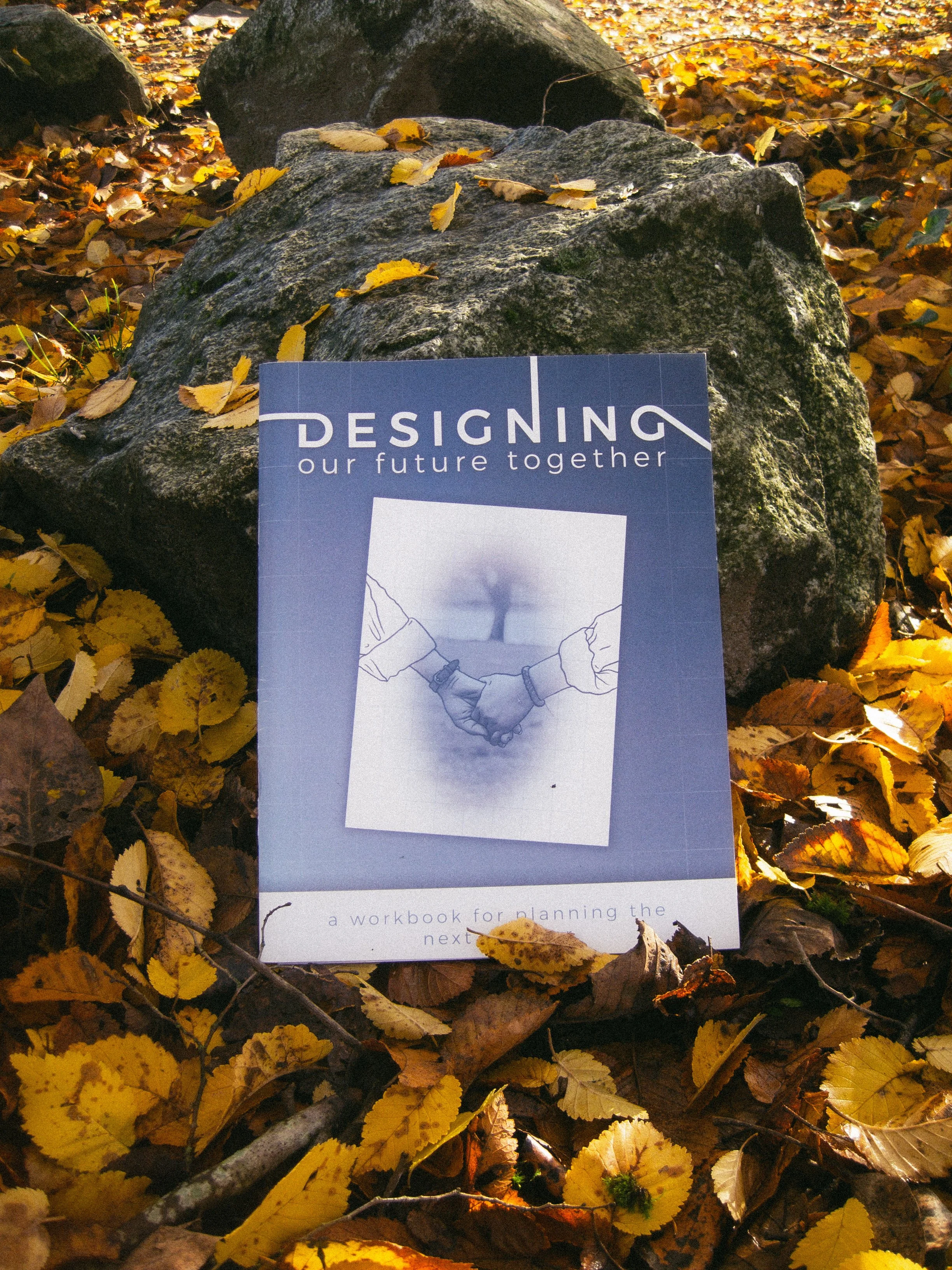
Designing Our Future Together
We offer a resource package built around the Designing Our Future Together workbook — a structured guide for couples to work through finances, expectations, and legal planning together before meeting with a lawyer.
The package is paired with a consultation where we map out what you actually need and what it will cost — whether that's mediation, legal advice for one of you, or a jointly drafted agreement.
These conversations work best when they happen early, before stakes are high and positions are fixed. Decide together how you would like to structure your finances in your relationship.
We Can't Reach an Agreement on our Own

Arbitration
Arbitration is a private, binding process in which both parties present their case to a trained arbitrator.
The arbitrator then makes a final decision, known as an award, that is legally enforceable.
It works similarly to court, but is typically faster, more flexible, less expensive, and considerably less adversarial. For families who need a decision made but want to stay out of the public court system, arbitration is a meaningful alternative.
Rebecca will be offering family arbitration services following completion of her arbitration training in summer 2026.
Mediation-Arbitration
Mediation-Arbitration (med-arb) is a hybrid process that begins as mediation and, if needed, transitions into arbitration — with the same neutral third party throughout.
Both spouses start by working toward agreement with the support of a mediator. If some issues remain unresolved, the process shifts into arbitration and the med-arbitrator makes a binding decision on those outstanding matters. The result: a complete resolution, one way or another, without court.
In practice, the knowledge that arbitration follows if agreement isn't reached tends to motivate settlement — studies from BC and Ontario suggest 85–90% of med-arb files resolve fully during the mediation phase.
Rebecca will be offering med-arb services following completion of her arbitration training in summer 2026.